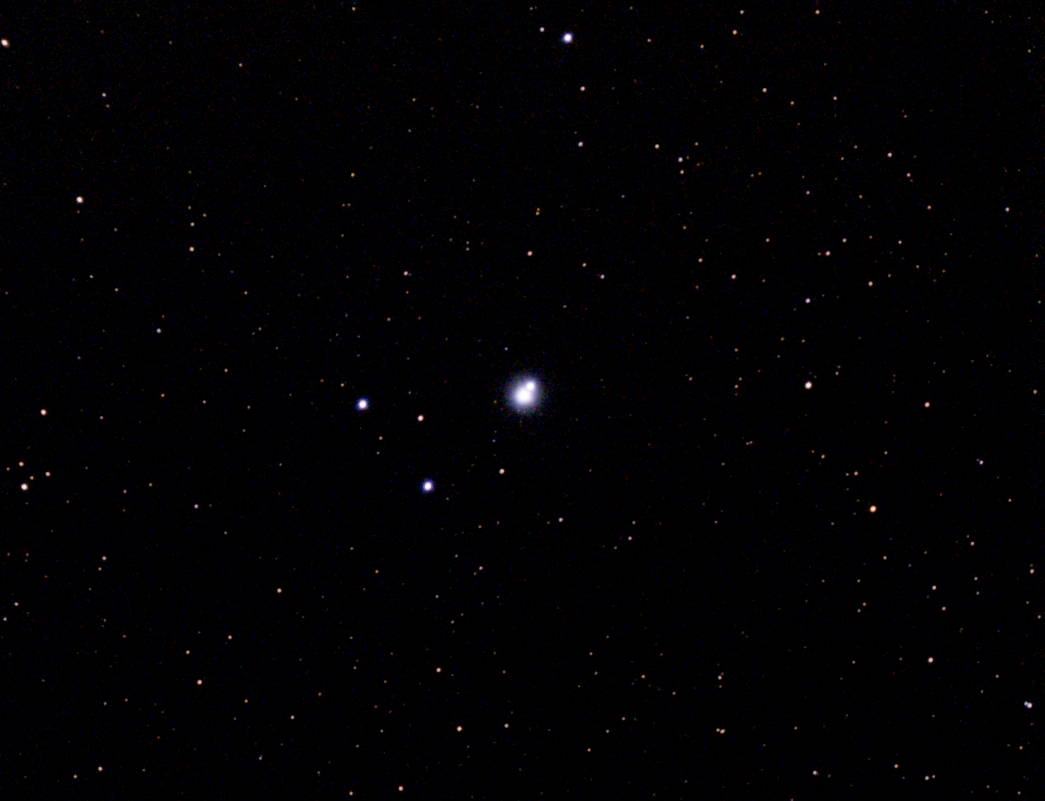
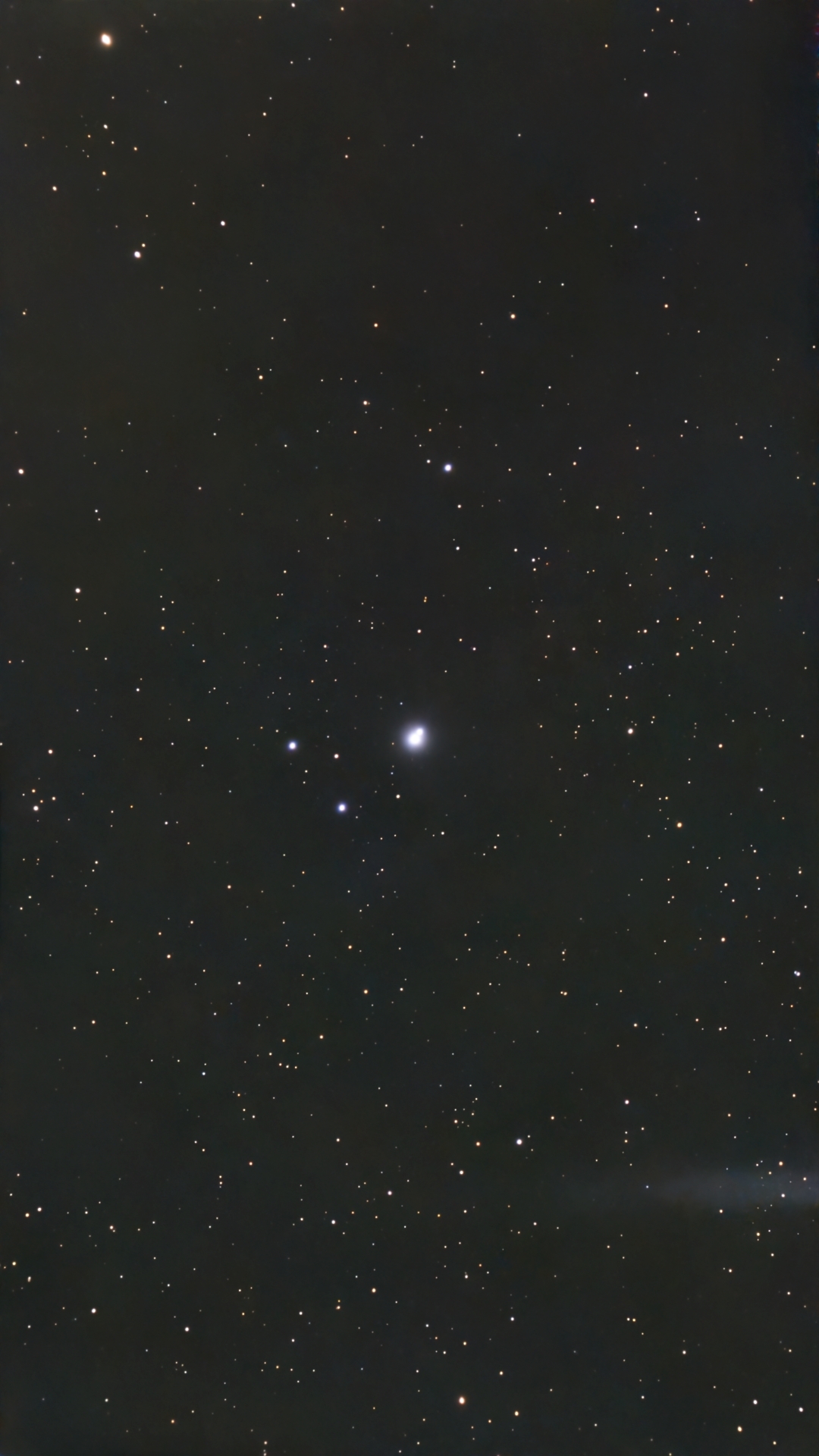
NGC 6888

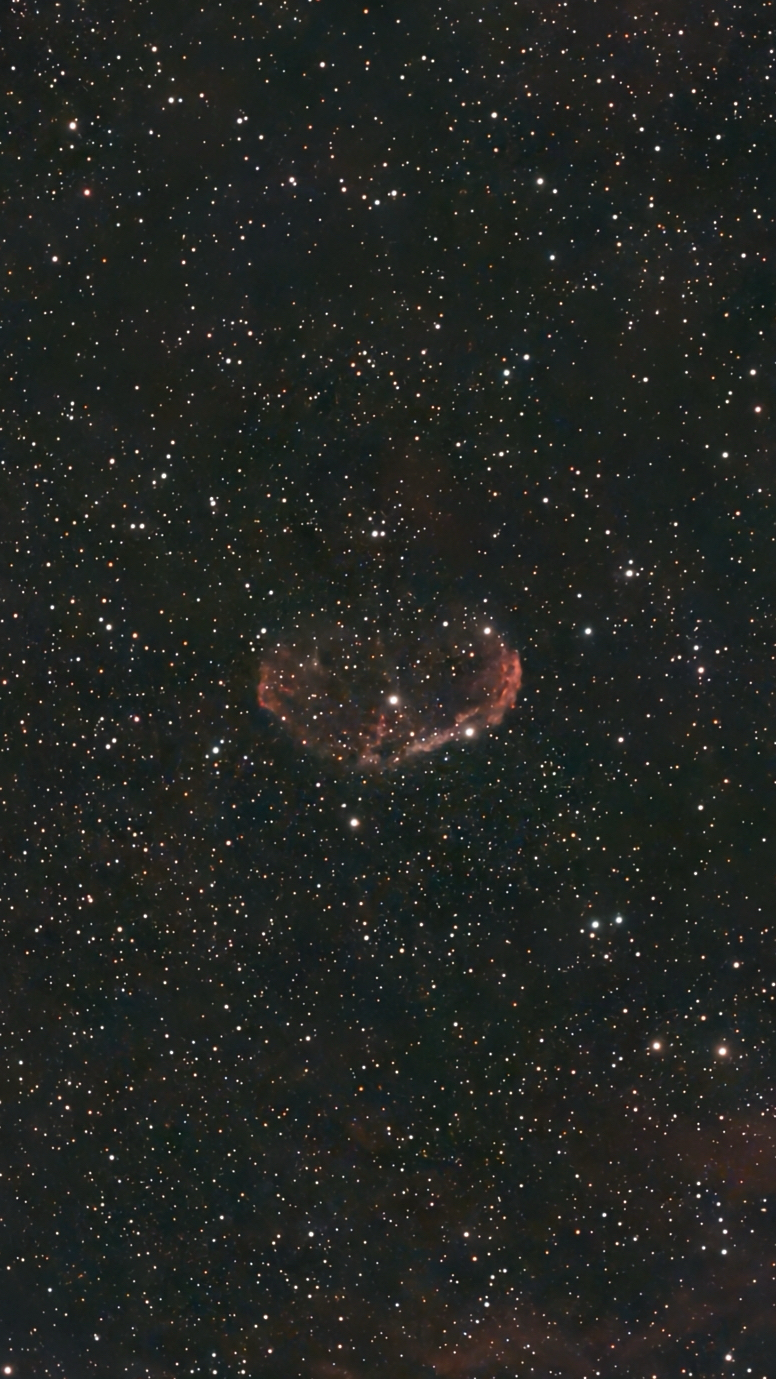
NGC 6888, also known as Caldwell 27, Sharpless 105, and the Crescent Nebula, is an emission nebula in the constellation Cygnus, discovered in 1792. It’s an expanding bubble of ionized gas sculpted by winds from the Wolf-Rayet star WR 136, spanning 25 x 18 arcminutes. The apparent magnitude is 7.4 and the distance from Earth is approximately 5,000 light-years.

Image captured on 09-26-2025.

Laser Project - Configuration

The Laser Project is a custom-built unit powered with the BIGTREETECH Rodent and a Laser Tree K30. This project has been designed and built from the ground up as a project for learning about cartesian-based CNC operations (and fueled with a passion for high-powered laser cutting!).

Parts, models, & components: coming soon.

Configuration:

Based on the design of this project, below is the configuration used for FluidNC. Because the laser design was only a 2-axis design, the z-axis configuration model has been removed and motor1 in the y axis configuration was added (with the pin settings from z). Furthermore, there has been a lot of ambiguity on the proper entries to use for FluidNC regarding the Rodent board. The overall consensus here was to utilize the guidance from BigTreeTech’s FluidNC Page and BigTreeTech’s GitHub.

The most important part of this section is utilizing the proper pins for each entry module. Based on the FluidNC’s guide, the following pins are the correct entries for each motor:

PIN DRIVE
I2SO.0 X DISABLE
I2SO.1 X DIRECTION
I2SO.2 X STEP
I2SO.3 LED R
I2SO.4 Y DIRECTION
I2SO.5 Y STEP
I2SO.6 NOT USED
I2SO.7 Y ENABLE
I2SO.8 Z DISABLE
I2SO.9 Z DIRECTION
I2SO.10 Z STEP
I2SO.11 LED B
I2SO.12 A DIRECTION
I2SO.13 A STEP
I2SO.14 LED G
I2SO.15 A DISABLE

Here is the original rodent.yaml file that was included on the BTT Rodent board. This configuration was part of the FluidNC 3.0.8 NoGit version. During this process, the Rodent firmware (FluidNC) was updated to 3.8.2.

According to FluidNC’s wiki, the BTT Rodent has one small quirk that will cause the TMC drivers to not function properly; that is, if you only have 3 motors…

The spi_index value in the config file indicates which driver you are configuring. They are numbered 1 through 4, from left to right. FluidNC needs to know that there are 4 motor drivers in the daisy chain. If you are using less than 4, one of the drivers you need to use is number 4.

FluidNC’s Rodent Wiki Page

This led to two initial options, but ultimately, the best solution was to move the Y2 motor cable from the Z header to the Y header and reconfigure motor1 to use the A pins in the configuration.

Here is the configuration file used to get motion working:

board: BTT Rodent V1.0
name: BTT CNC
meta: (04.12.2024) by BTT

kinematics:
  Cartesian:

stepping:
  engine: I2S_STATIC
  idle_ms: 255
  pulse_us: 4
  dir_delay_us: 1
  disable_delay_us: 0

axes:
  shared_stepper_disable_pin: NO_PIN
  x:
    steps_per_mm: 80.000
    max_rate_mm_per_min: 5000.000
    acceleration_mm_per_sec2: 100.000
    max_travel_mm: 800.000
    soft_limits: false
    homing:
      cycle: 1
      positive_direction: false
      mpos_mm: 150.000
      feed_mm_per_min: 100.000
      seek_mm_per_min: 200.000
      settle_ms: 500
      seek_scaler: 1.100
      feed_scaler: 1.100

    motor0:
      limit_neg_pin: NO_PIN
      limit_pos_pin: gpio.35
      limit_all_pin: NO_PIN
      hard_limits: false
      pulloff_mm: 1.000
      tmc_5160:
        step_pin: I2SO.2
        direction_pin: I2SO.1:low
        disable_pin: I2SO.0
        cs_pin: gpio.5
        spi_index: 1
        r_sense_ohms: 0.075
        run_amps: 1.000
        hold_amps: 0.500
        microsteps: 16
        toff_disable: 0
        toff_stealthchop: 5
        use_enable: false
        run_mode: CoolStep
        homing_mode: CoolStep
        stallguard: 16
        stallguard_debug: false
        toff_coolstep: 3
        tpfd: 4

  y:
    steps_per_mm: 80.000
    max_rate_mm_per_min: 5000.000
    acceleration_mm_per_sec2: 100.000
    max_travel_mm: 800.000
    soft_limits: false
    homing:
      cycle: 1
      positive_direction: true
      mpos_mm: 150.000
      feed_mm_per_min: 100.000
      seek_mm_per_min: 200.000
      settle_ms: 500
      seek_scaler: 1.100
      feed_scaler: 1.100

    motor0:
      limit_neg_pin: NO_PIN
      limit_pos_pin: gpio.34
      limit_all_pin: NO_PIN
      hard_limits: false
      pulloff_mm: 1.000
      tmc_5160:
        step_pin: I2SO.5
        direction_pin: I2SO.4:low
        disable_pin: I2SO.7
        cs_pin: NO_PIN
        spi_index: 2
        r_sense_ohms: 0.075
        run_amps: 1.000
        hold_amps: 0.500
        microsteps: 16
        toff_disable: 0
        toff_stealthchop: 5
        use_enable: false
        run_mode: CoolStep
        homing_mode: CoolStep
        stallguard: 16
        stallguard_debug: false
        toff_coolstep: 3
        tpfd: 4
        
    motor1:
      limit_neg_pin: NO_PIN
      limit_pos_pin: gpio.33:pu
      limit_all_pin: NO_PIN
      hard_limits: false
      pulloff_mm: 1.000
      tmc_5160:
        step_pin: I2SO.13
        direction_pin: I2SO.12
        disable_pin: I2SO.15
        cs_pin: NO_PIN
        spi_index: 4
        r_sense_ohms: 0.075
        run_amps: 1.000
        hold_amps: 0.500
        microsteps: 16
        toff_disable: 0
        toff_stealthchop: 5
        use_enable: false
        run_mode: CoolStep
        homing_mode: CoolStep
        stallguard: 16
        stallguard_debug: false
        toff_coolstep: 3
        tpfd: 4
        
i2so:
  bck_pin: gpio.22
  data_pin: gpio.21
  ws_pin: gpio.17

spi:
  miso_pin: gpio.19
  mosi_pin: gpio.23
  sck_pin: gpio.18

sdcard:
  cs_pin: gpio.0
  card_detect_pin: NO_PIN
  frequency_hz: 8000000

# Begin Huanyang
uart1:
  txd_pin: gpio.15
  rxd_pin: gpio.16
  rts_pin: gpio.14
  baud: 9600
  mode: 8N1

Huanyang:
  uart_num: 1
  modbus_id: 1
  tool_num: 0
  speed_map: 0=0% 0=25% 6000=25% 24000=100%
  off_on_alarm: false
  
# PWM:
#   pwm_hz: 5000
#   output_pin: gpio.13
#   enable_pin: gpio.25
#   direction_pin: gpio.15
#   disable_with_s0: false
#   s0_with_disable: false
#   spinup_ms: 0
#   spindown_ms: 0
#   tool_num: 0
#   speed_map: 0=0% 10000=100%
#   off_on_alarm: false

i2c0:
   sda_pin: gpio.27
   scl_pin: gpio.26

status_outputs:
  report_interval_ms: 500
  idle_pin: I2SO.11:low
  run_pin: I2SO.14:low
  alarm_pin: I2SO.3:low

Orion Nebula

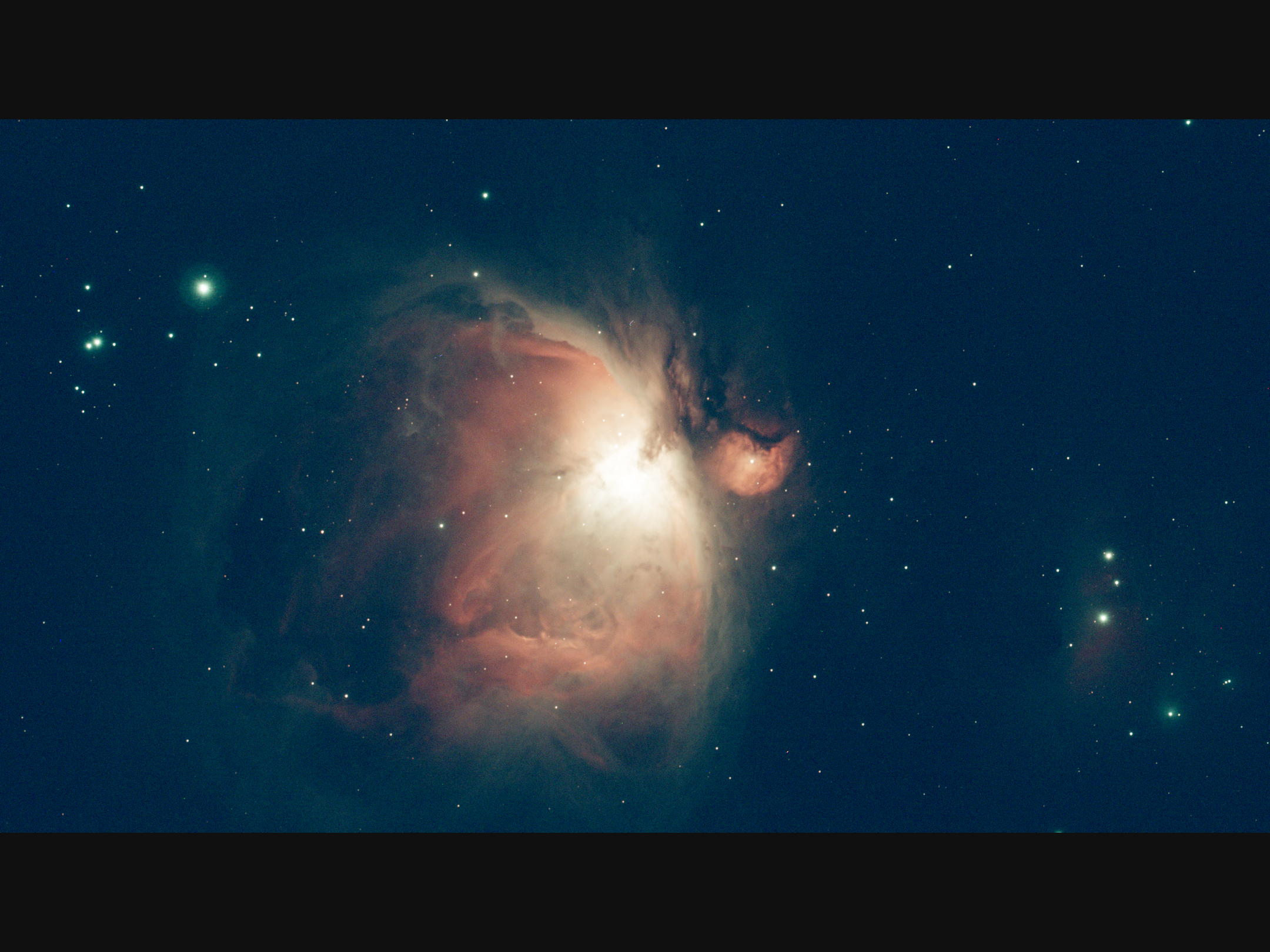
This was my first shot of the Orion Nebula with my new camera. Overexposed, and blown out, but it still looked pretty cool!

Custom Armbian for Orange Pi 5B

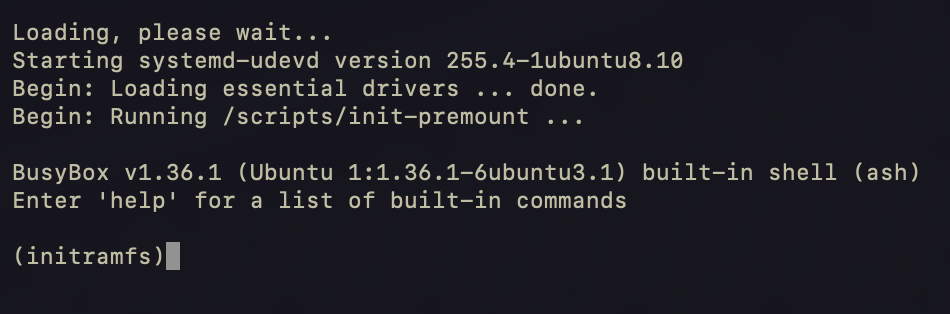
After attempting to install the Armbian 6.12 image on the Orange Pi 5B, there seemed to be compatibility issues that caused the image to drop into initramfs console.

armbian-initramfs

From a little bit of analysis, it appeared to be an issue with some of the initial setup scripts. However, multiple attempts with multiple images rendered the same results.

The simplest solution was to build the Armbian image from the source code to see if it was something that could be identified during the build process.

Preparing the Environment

While not explicitly stated anywhere that I could find on Armbian documentation; I thought that Ubuntu Server would be the best virtual machine to build the image in. Using Unraid as the bare-metal server; I created a virtual machine that would be able to make quick work of the build process for Armbian.

Virtual Machine Configuration:

vCPUs 16
Memory 32768 MB
Machine Q35-9.2
BIOS OVMF
USB Controller (not important) 2.0 (EHCI)
Primary vDisk Bus VirtIO
vDisk size 2 TiB
Graphics Virtual
Console Protocol VNC
Console Video Driver QXL

CPU count and memory were the most important for this project, followed by disk size. With 16 cores and 32 GiB of dedicated memory, the entire build process took approximately 30-45 minutes.

For building Ubuntu Server, the default values for everything were perfect. No additional packages needed to be added from the installer. I did enable ssh and ensured that the user was created with administrator permissions as well.

When searching for the best way to configure the build environment, it seemed like Armbian fell short on this explanation as well. There are a few packages that need to be installed for the build process to be successful. Of note, I did NOT apply the latest updates to this build. There are many reasons, but the primary is the stability of the LTS server image. Since the Armbian image is being built with docker, the host OS (or in this case, the virtual machine) does not need to have the bleeding edge. Stability is key for success!

(root)_# apt update
(root)_# apt install ca-certificates curl gnupg  
(root)_# install -m 0755 -d /etc/apt/keyrings

(root)_# curl -fsSL https://download.docker.com/linux/ubuntu/gpg | sudo gpg --dearmor -o /etc/apt/keyrings/docker.gpg

(root)_# chmod a+r /etc/apt/keyrings/docker.gpg
(root)_# echo \
  "deb [arch="$(dpkg --print-architecture)" signed-by=/etc/apt/keyrings/docker.gpg] https://download.docker.com/linux/ubuntu \
  "$(. /etc/os-release && echo "$VERSION_CODENAME")" stable" | \
 tee /etc/apt/sources.list.d/docker.list > /dev/null

(root)_# apt update && apt install docker-ce docker-ce-cli containerd.io docker-buildx-plugin docker-compose-plugin screen git qemu-user-static binfmt-support

(root)_# groupadd docker
(root)_# gpasswd -a [YOURUSER] docker
(root)_# newgrp docker

(root)_# systemctl enable --now docker

This would be a good time to reboot the container so that everything just resolves. Sure, there are other ways to make sure that services are started and things work, but sometimes, a reboot just works!

Reboot

Ensure the docker service has started successfully. (systemctl status docker).

Log in as the user that was created at the installation. (I created the user ‘build’ for simplicity).

From the user’s home directory, clone the repo:
git clone https://github.com/armbian/build

Navigate to the build directory:
cd ~/build

Compile the image with the following command:

./compile.sh BOARD=orangepi5b BRANCH=current RELEASE=noble BUILD_DESKTOP=yes DESKTOP_ENVIRONMENT=gnome DESKTOP_ENVIRONMENT_CONFIG_NAME=config_default

Download

Download

Update

There appears to be some issues with the graphics regarding the use of Gnome/GDM/GTK. Xfce seems to work fine, but when GDM is started with Wayland, the graphics service becomes unresponsive. This might have something to do with Mesa, Libmali, or Panfrost. More to follow.

As of now, the image works in a minimal configuration.

M 17

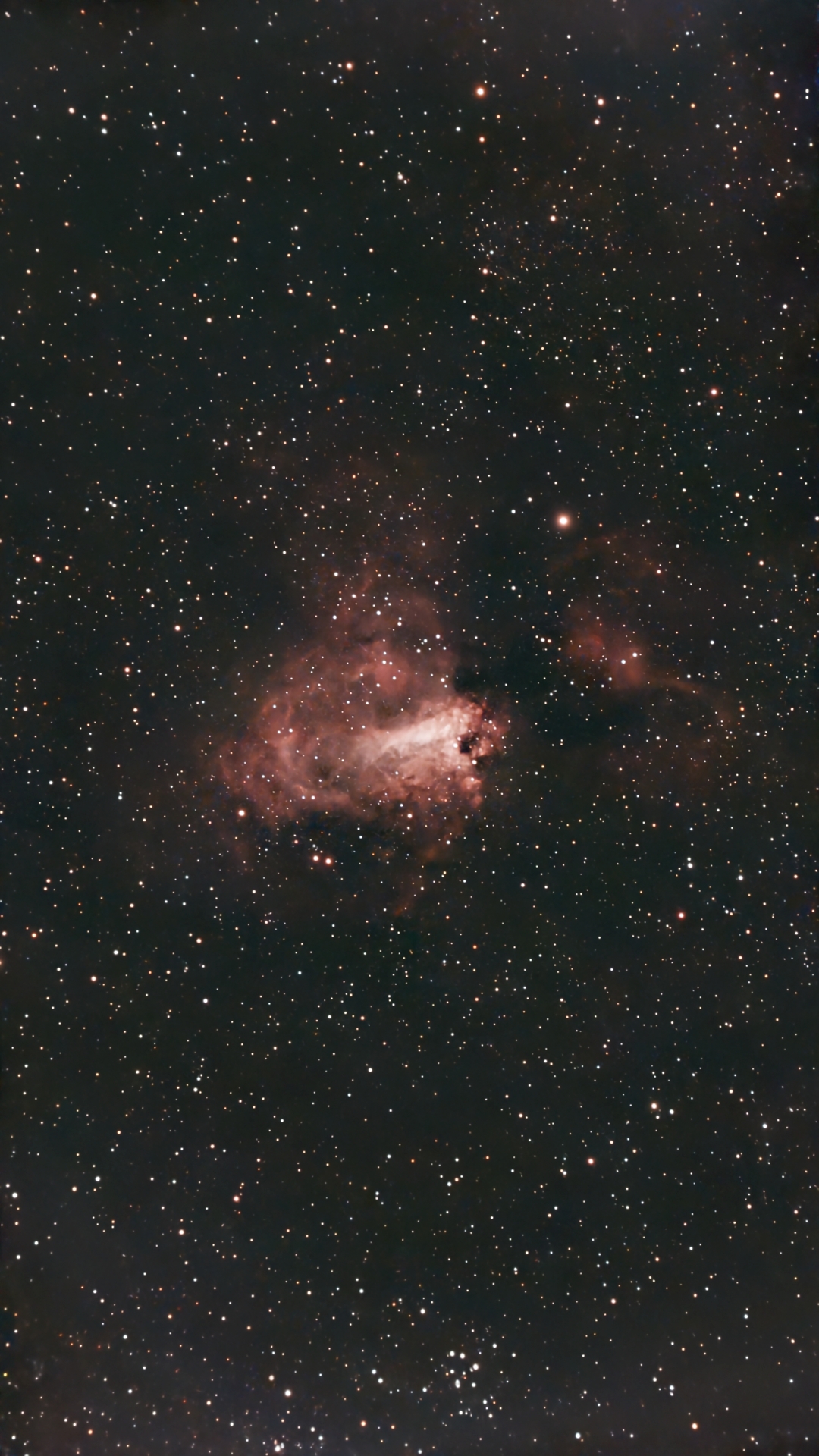
M17, also known as the Omega Nebula, Swan Nebula, NGC 6618, Horseshoe Nebula, Lobster Nebula, and Checkmark Nebula, is a bright emission nebula and H II region in the constellation Sagittarius, discovered in 1764. It’s a prolific star-forming region ionized by a young open cluster of massive stars, resembling the Greek letter omega or a swan’s neck in wide-field views, spanning about 11 arcminutes. Apparent magnitude is 6.0. Distance from Earth is 5,500 light-years.

Image captured on 09-08-2025.

Orange Pi Astrophotography Project

I’m already at a disadvantage with my setup as my primary computer is a MacBook Pro M3. As I’ve learned over the years; Mac laptops are amazing computers and have a superior battery life, but they really lack that extra support. Regardless, I have found my way 95% of the time and I am willing to give it a go.

Remember what your goal is. You’ve set out to install Arch Linux on the Orange Pi 5 Max, and get the most out of the device features while getting the most out of the latest mainline kernel.

The project is the beginning phase for creating a simple automation tool to process images taken from the SeeStar S30 astrophotography telescope.


Requirements

  • CIFS for mounting samba shares (the S30 uses samba as its main file-sharing capability).

If this falls short, you have options. There were reports of mtpfs working as well. Research is always an option if things go south.

  • Hailo M.2 module support for AI processing / offloading the workload of the RK3588 processor.
  • Wifi and Bluetooth support (not for any particular reason, but just to have it.)

Of note, if the onboard AP6611s wifi/bluetooth module doesn’t work, the alternative is to use the TP-Link AC1300 USB wifi dongle.

Phase 1

Getting the Arch Linux ARM image installed and booting Arch Linux ARM on the Orange Pi 5 Max.

There were a few places to obtain the Arch Linux ARM image, or it could have easily been built, but ultimately, the archlinux-installer project seemed like an easy solution to start with. Images were readily available for the Orange Pi 5 Max that appear to have more up-to-date blobs for dtb/dts with regard to device support.

Images were available to download.

The installation guide seemed relatively easy to follow along as well.

Knowing that there are hurdles ahead, cutting corners when possible is always acceptable, especially if this corner is trivial and doesn’t impact the end-goal outlined in the requirements. Work smarter, not harder.

Getting the image onto the EMMC chip.

Using the Mac terminal, home-brew tools, and a little bit of time, it seems relatively easy to install.

Direct flashing to the EMMC is the best option in my opinion because it’s quick and simple. The requirements are rkdeveloptool, mini-loader.bin file, USB OTG cable for the connection to the maskrom port (top-left USB port on the Orange Pi 5 Max), and the Arch Linux img file.

  1. Plug the USB into the computer and the maskrom USB port.
  2. Before connecting the power, hold down the boot rom button next to GPIO pins.
  3. From a terminal check if the board was detected in maskrom mode:
rkdeveloptool ld

Should get a response like this:

01-rkdevtool-response
  1. Next, download the boot loader (this is where the mini-loader .bin file comes in):
rkdeveloptool db /Users/roberts/Development/software/OrangePi/opi5m/cfg-bin-files/MiniLoaderAll.bin

Looking for that succeeded.

02-rkdevtool-db-bin
  1. Erase the flash. (Just in case anything might be there). Who knows if this is actually required, I just read it everywhere that it’s a good practice. So, in keeping with the tradition, wipe it!
rkdeveloptool ef

Takes about 15 seconds, and that complete message (that doesn’t have any errors around it) is always a welcome sight!

03-rkdevtool-ef-complete
  1. Flash the image. This is the longest part of the process. 5-10 minutes. Make sure to get that beginning sector right as well.
rkdeveloptool wl 0

Bathroom break while waiting for the completion…

04-rkdevtool-wl-start

Started a 3D print for an M.2 extender to be able to mount the Hailo module in the back side of the board.

And, the 100% LBA from file completion. Image is loaded, and should boot.

05-rkdevtool-wl-complete
  1. Reset the device (or just pull the power). I pulled the power to mount the Hailo module.

The M.2 extender worked pretty good. It holds the module in place. It should be even better once a case is designed that will fit the module and have multiple fans on it.

Note: Design a case for the Orange Pi 5 Max that will fit the Hailo module with its heat sink and have enough height for two fans. Need adequate cooling for this thing. Don’t want to be temperature throttled because of a careless oversight.

After the flash, the installer loaded, then the Orange Pi performed a reboot, and when it restarted, the installer was on the screen. This is off to a great start.

According to the install guide, connecting to wifi was a requirement. Once that was complete, the installation was extremely simple with only a few choices to make (kernel, desktop environment, user name and password), and that was about it. It seemed to go by pretty quickly.

Of note, The recommended kernel was this Joshua’s 6.10 kernel. Joshua-Riek Github. Haven’t heard of it, but again, get it to a working state first, then expand the horizon of possibilities.

Xfce was clearly the desktop of choice. Minimal footprint, low resource consumption. This is only important because of the deployment on an SBC.

M 16

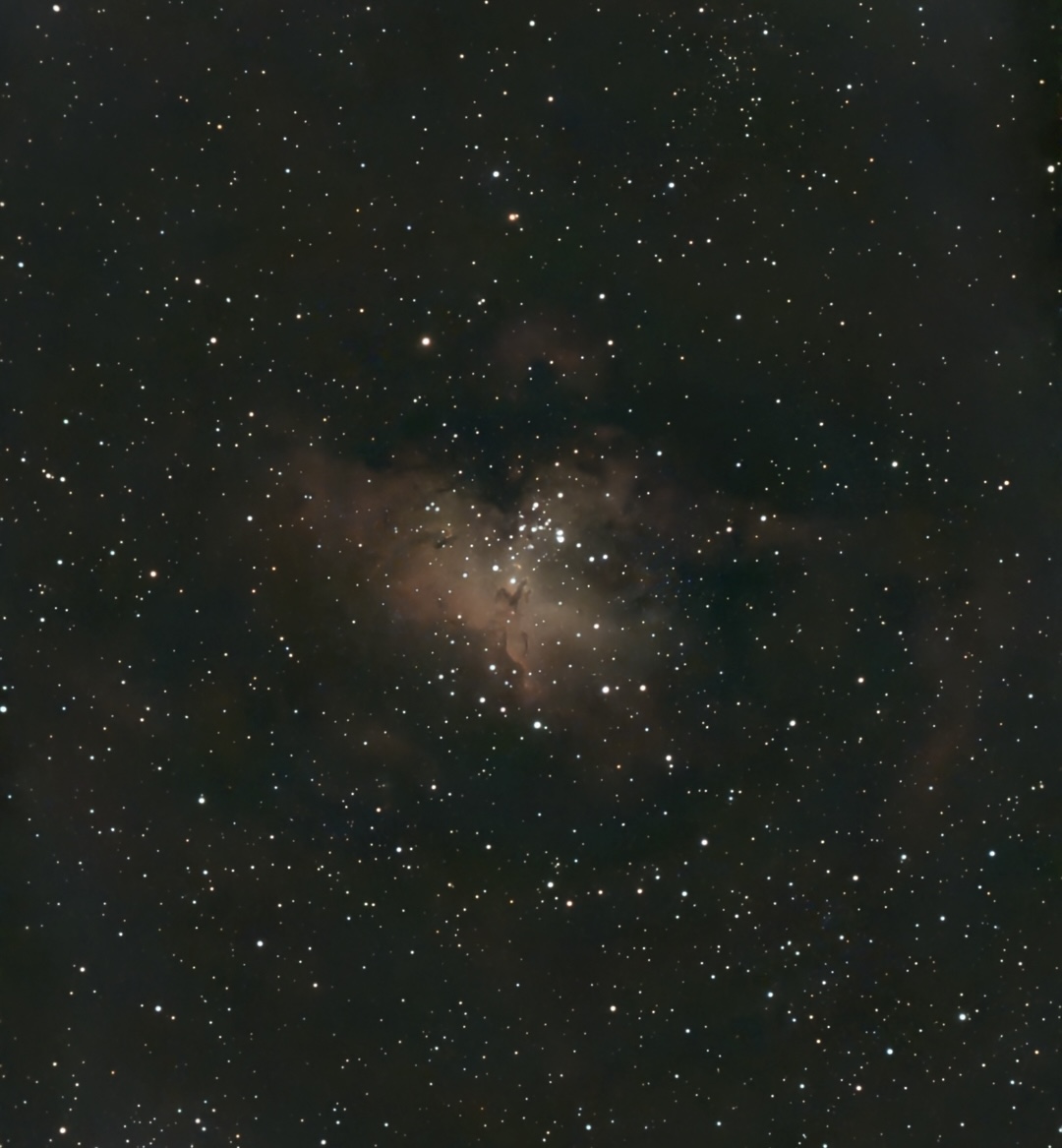
M16, the Eagle Nebula, NGC 6611, or famously known as the iconic Pillars of Creation, is an emission nebula and open star cluster in the constellation Serpens, discovered in 1746. It’s a stellar nursery ionized by young O and B stars, spanning 70 x 50 arcminutes and towering columns of gas and dust 4-5 light-years tall. Apparent magnitude is 6.0. Distance from Earth is 7,000 light-years.

Image captured on 08-15-2025.

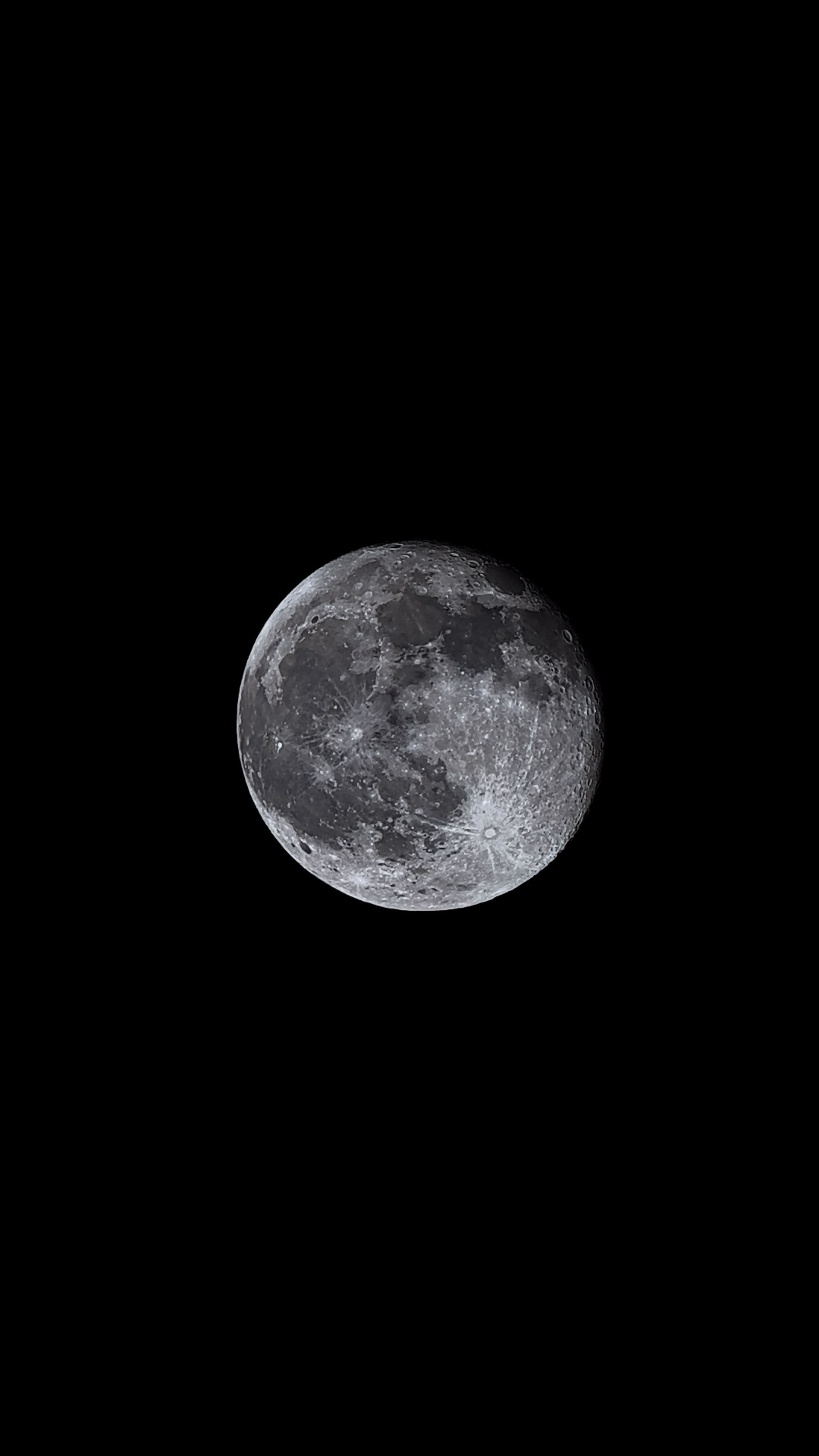
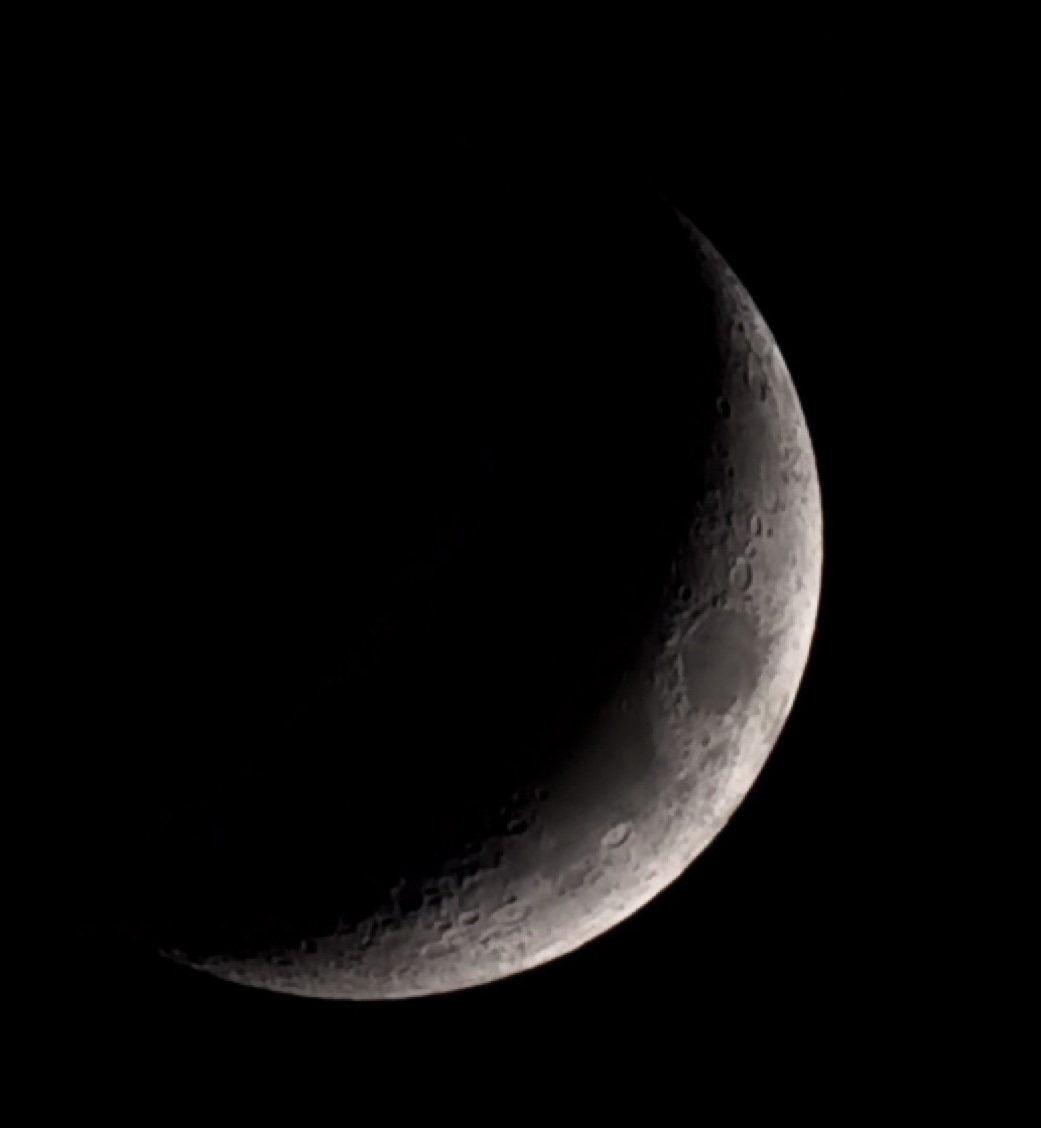
The Moon - 03 August 2025

moon-2055l03aug2025

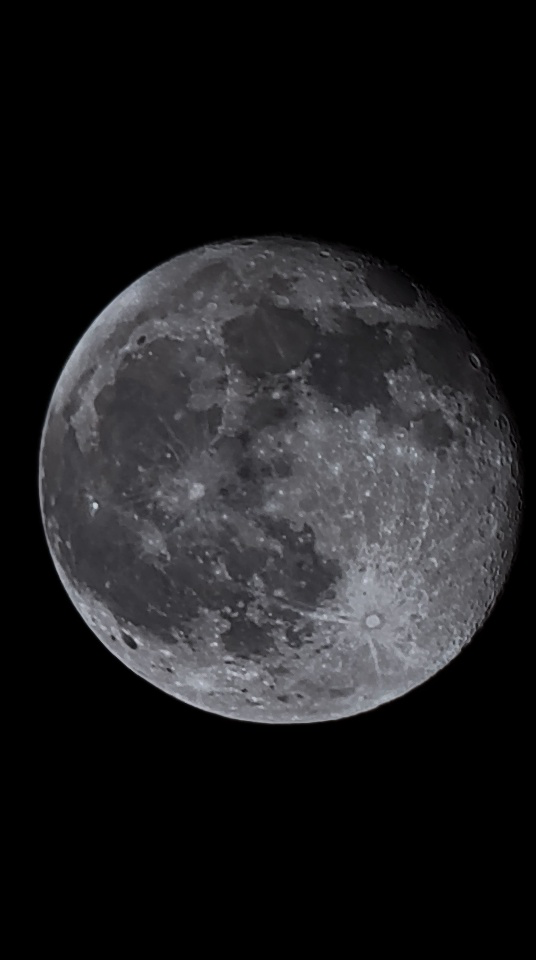
The Moon is Earth’s only natural satellite, orbiting at an average distance of about 384,000 kilometers (239,000 miles). Its surface is marked by craters, mountains, and basalt plains, and its gravitational pull drives the ocean tides on Earth.

Nothing else needs to be said about the moon….

Captured on 03 August 2025.

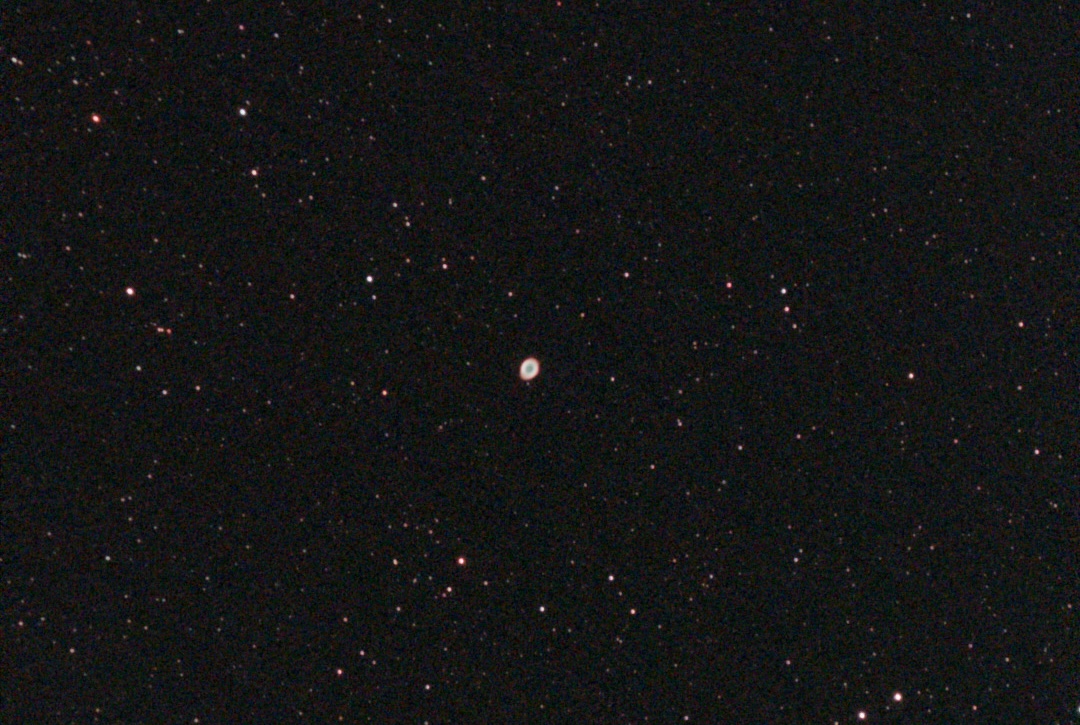
Messier 57

m57-2135l03aug2025

Messier 57, known as the Ring Nebula, is a planetary nebula about 2,300 light-years away in the constellation Lyra. It is the glowing remnant of a dying star, forming a bright ring of ionized gas surrounding a faint white dwarf at its center.

This one is harder to see, but looking closely, there are colored rings; red on the outside to blue on the inside.

Captured on 03 August 2025

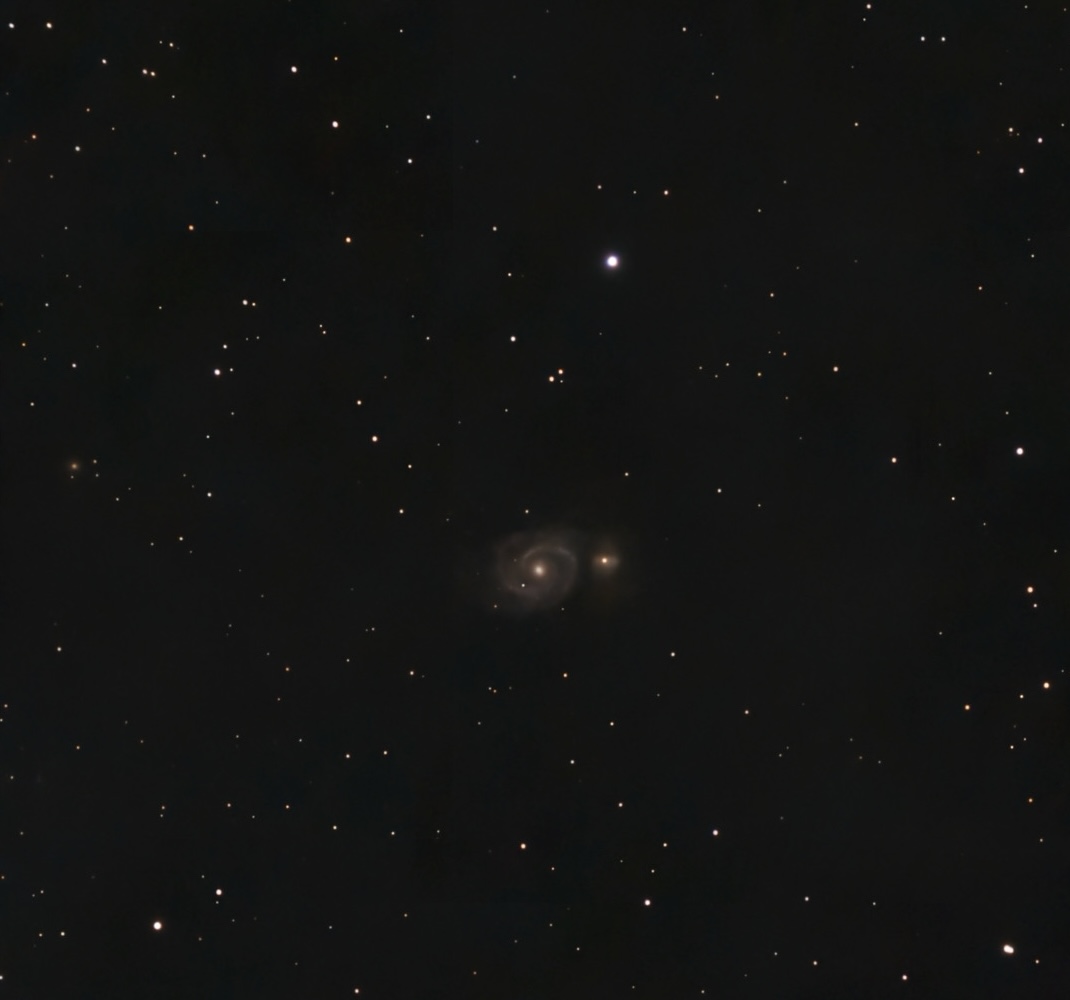
Messier 51

m51-2154l03aug2025

Messier 51, also known as the Whirlpool Galaxy, is a classic spiral galaxy located about 27 million light-years away in the constellation Canes Venatici. It is interacting with a smaller companion galaxy (NGC 5195), a process that has enhanced its striking spiral arms and regions of active star formation.

Captured on 03 August 2025.

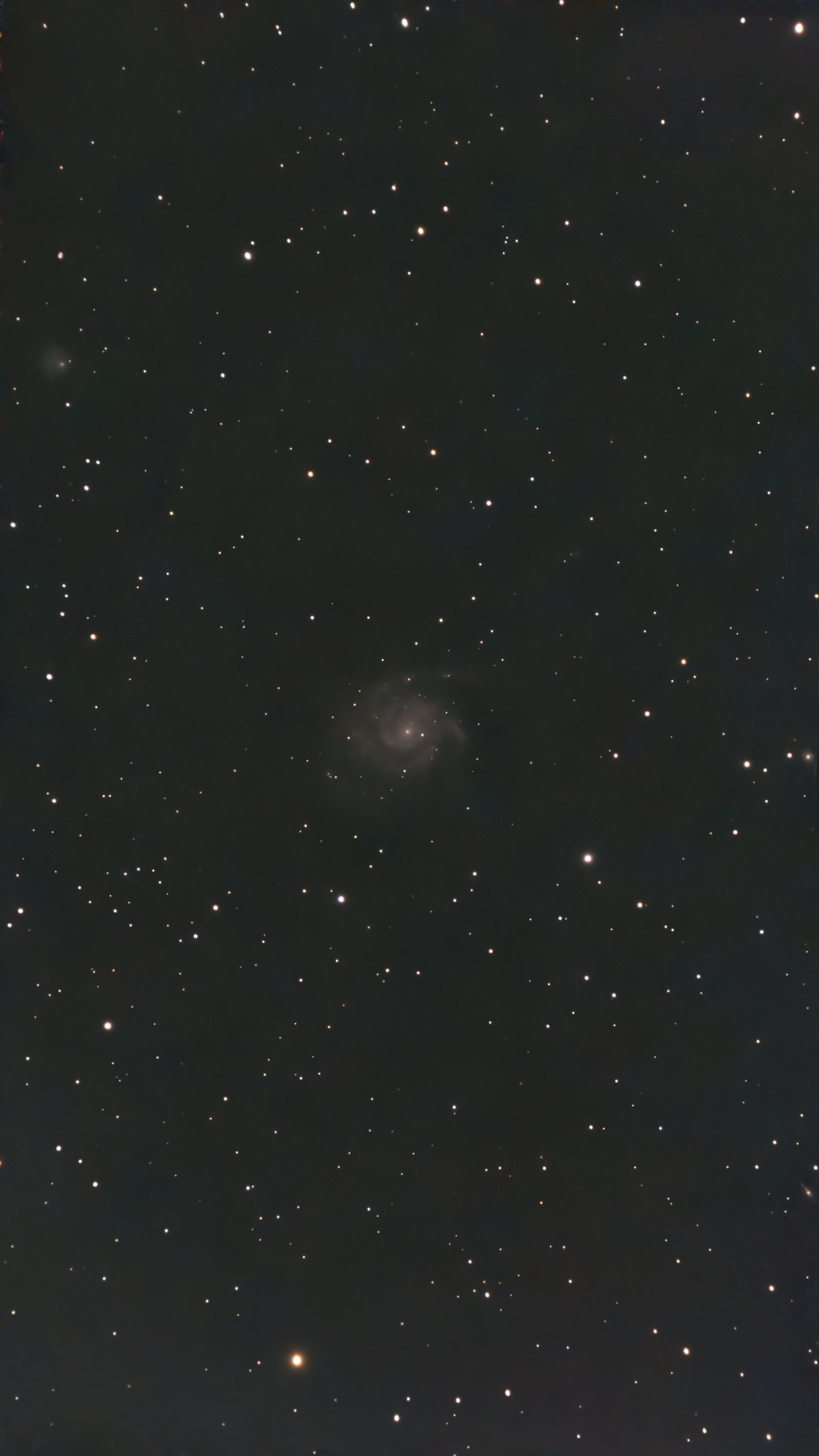
M 101

M101, also known as NGC 5457 or the Pinwheel Galaxy, is a face-on grand design spiral galaxy in the constellation Ursa Major, discovered in 1781. It features prominent spiral arms and spans about 170,000 light-years in diameter. Apparent magnitude is 7.9. Distance from Earth is 21 million light-years.

Image captured on 07-29-2025.

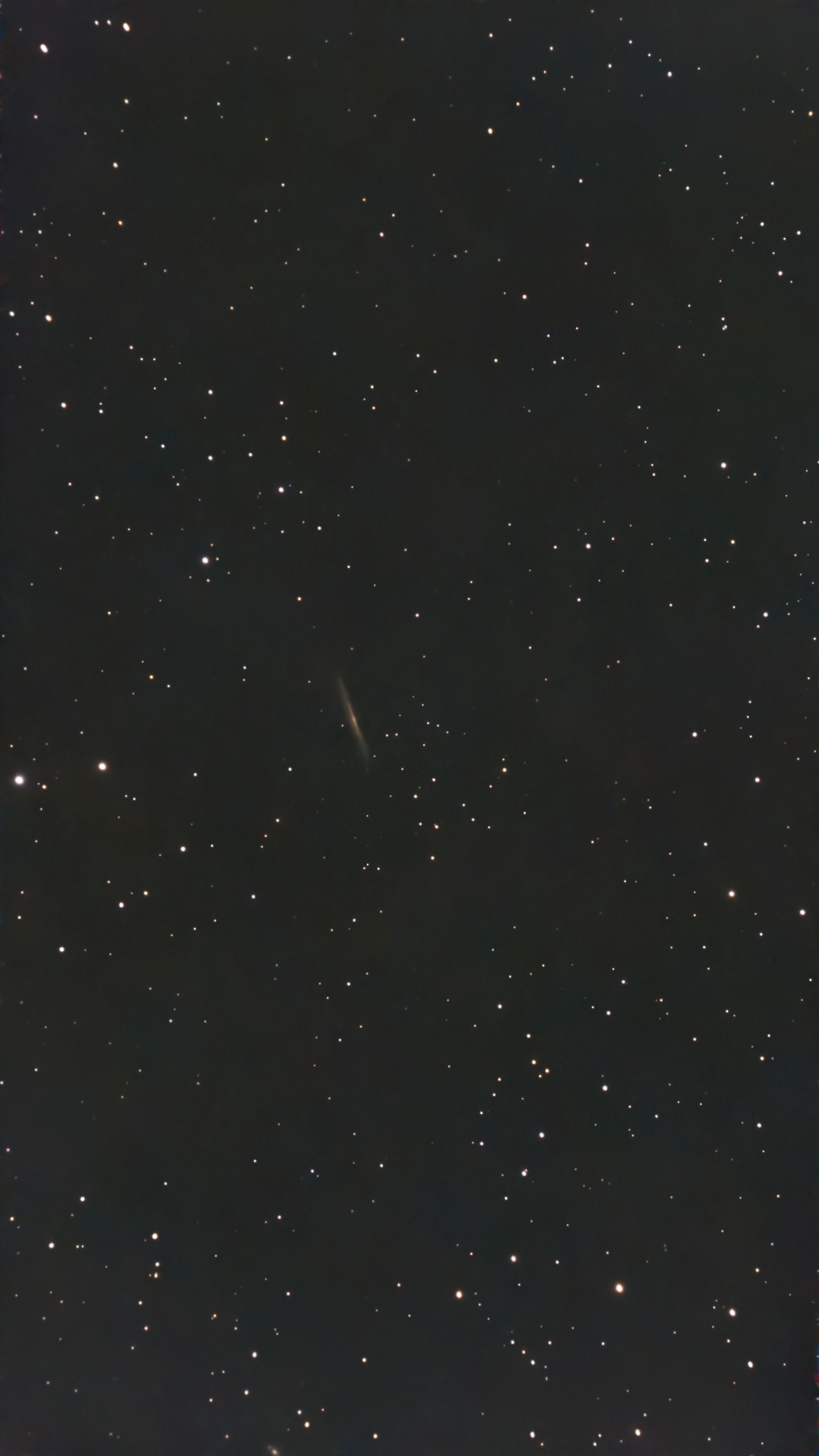
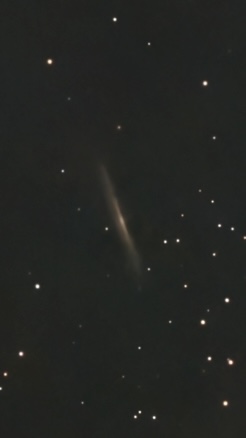
NGC 5907

NGC 5907, known as Knife Edge Galaxy, NGC 5906, and the Splinter Galaxy, is an edge-on spiral galaxy in the constellation Draco, discovered on May 5, 1788. It’s known for its razor-thin disk and vast stellar streams from disrupted satellite galaxies, with a diameter of about 173,000 light-years. Apparent magnitude is 11.1. Distance from Earth is 46.6 million light-years.

IC 4592

ic4592-2208l28jul2025

Imum Coeli (or IC) 4592, called the Blue Horsehead Nebula, is a reflection nebula about 400 light-years away in the constellation Scorpius. Its bluish glow comes from starlight scattering off surrounding interstellar dust, giving it the shape of a horse’s head when viewed in long-exposure images.

Captured on 28 July 2025.

IC 4952

IC 4952, also known as PGC 64163, is a spiral galaxy of Hubble type Sa in the constellation Telescopium, and was discovered on October 3, 1901. It lies approximately 189 million light-years from Earth and belongs to the Lyons Groups of Galaxies LGG 429, with a redshift of 0.014260.

Apparent visual magnitude is 13.1, with an angular size of 1.3 by 0.6 arcminutes and surface brightness of 12.7 mag/arcmin². Alternate names include ESO 186-001 and 2MASX J20083763-5527132.

Image captured on 07-28-2025.

The Laser Cutter: Major Progress

I’ve moved past the gantry issues and finally started closing the gap to the finish line.

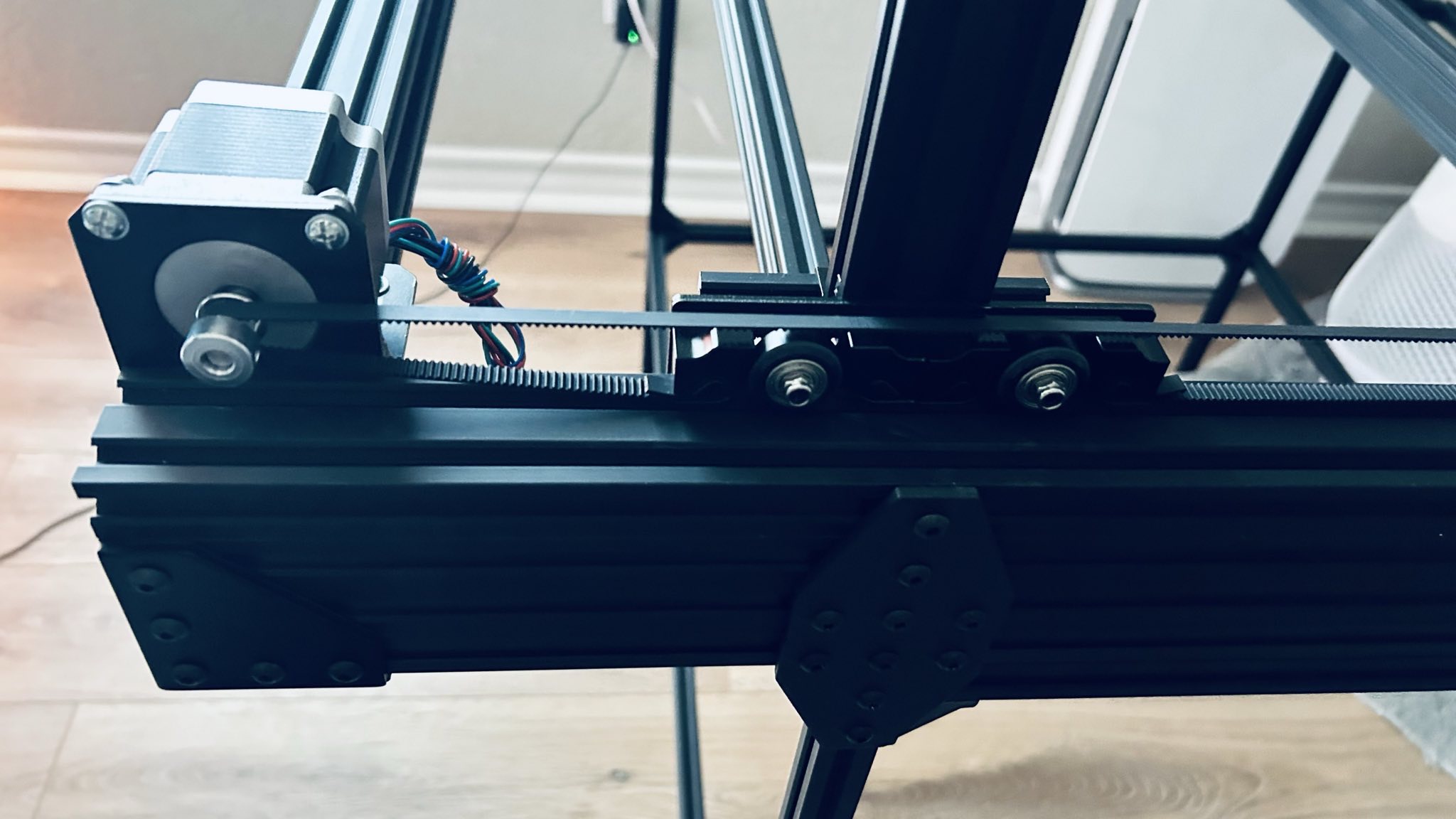
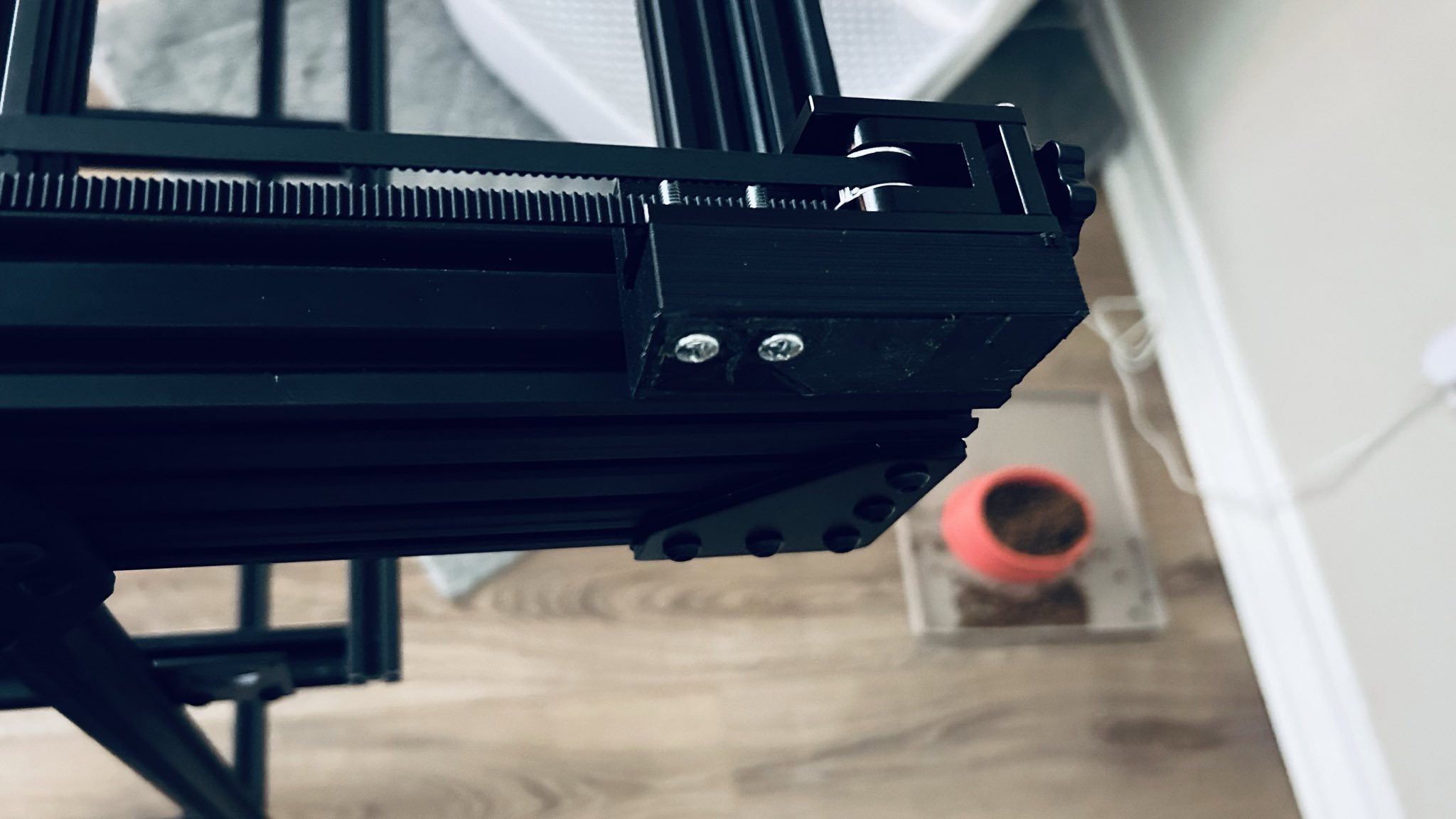
Once the gantry was completed, the next major milestone was the belts and the cable chains. I had to 3D print a few parts, but overall, this process was relatively seamless. The biggest pain was getting all of the cables into the chain without losing my mind.

Along with the cables was the air assist hose. Apparently, if I don’t want the place to catch fire, the hose is the right approach.

I also added an LED light strip to the underside of the gantry assembly so that I could get some extra light when watching it work.

The Custom CNC Laser. Updates to the Gantry.

Welcome back to the ongoing overview of my custom CNC laser project! If you’ve been following along, you know that this endeavor has been an interesting and time-consuming project full of innovation and problem-solving. In the latest chapter, I encountered a challenge with the gantry that required some creative solutions.

Originally, the gantry’s y-axis boasted a single cart for travel. But as the project was coming together and I added the z-axis travel, stepper motors, and the diode laser module, it quickly became clear that the weight was taking its toll. The gantry assembly started to present a huge problem of weight distribution.

In a stroke of engineering brilliance (if I do say so myself), I decided to give the gantry a makeover. By adding an extra cart to both sides, I managed to distribute the weight more evenly. The result? A better design and a gantry that can support the weight without unneeded tension on the carts and rails.

Of course, implementing this change wasn’t without its challenges. It required a reconstruction of the gantry assembly, which felt a bit like performing surgery on a robot. But hey, who doesn’t love a good DIY medical procedure now and then? (insert corny laugh to a dumb joke).

Now, as I inch closer to the finish line, my focus shifts to re-attaching all the gantry parts, installing the cable chain, and mounting the electrical components.

Soon, all of this will start coming together and the project will come to life. In the meantime, I will continue to document my progress and share my journey.

If you’re just joining the party, you can catch up on the previous chapters of this process by checking out my other blog posts.

And, because everything is better with pictures… here are some updated photos to the changes I’ve made.

Part 1: The Sad Reality Must be Addressed

Perhaps it’s just me, but I feel it’s time to pause, take a breath, and seek a fresh perspective. I find myself disillusioned with the constant barrage of this so-called “transparency” rhetoric and the persistent stream of deception surrounding the UFO/UAP disclosure. I don’t want to come off as pretentious, but I’m really at a loss for caring anymore.

These past few years are best described as a wild rollercoaster and I don’t think there is an adequate way of expressing the disappointment and disillusionment I (and likely many others) are left with.

Let’s begin with the recent revelation involving yet another “prominent figure” in this field announcing the release of a friend’s book, hinting at the known and unknown. This news triggered a surge of frustration within me. The thought of book, full of garbage riddles, some testimonies from Billy Bob’s family on the farm, and some knowledge quest with a giant question mark on the last page. Another author that will get rich at our expense.

Seven years ago, there was a huge breakthrough when the US Government released their statements on the Gimbal videos from the Nimitz incident. This shed some light on the topic, and they confirmed that they/we can’t identify what this is, but it’s undeniably a technology that is presumably not man made, not adversarial (to their knowledge), and potentially not of this world. With this release, they also acknowledged the authenticity of a few other videos and placed them in the same category.

Subsequently, a huge demand for transparency emerged. People wanted answers, hoping for insights that could either confirm humanity’s cosmic solitude or usher in a new era of scientific and technological advancement.

Instead, we inherited a group of people who have this knowledge, but are bound by some force to withhold it from humanity because of a fear that is fabricated on the pretense that a shadowed government agency is going to prosecute them for breaking a law. Whether such fears are warranted remains unclear, yet the notion persists that Congress will protect these individuals, allowing the truth to emerge.

Let’s confront reality for a moment…

An unnamed, illegally funded, shadow agency is behind the curtain playing all sides of the table. Yeah, okay. I’m sorry, but the idiots we have working in our government can’t keep secrets. Look at all the bullshit going on.

On the other side of this coin, what conceivable national security threat could be posed by acknowledging the existence of extraterrestrial or interdimensional intelligence? If they are stronger, better, more sophisticated, and more technically advanced than us, then it’s already too late.

As for the legalities of this. Who would dare prosecute a whistleblower for exposing a shadow government agency that is illegally withholding information and illegally spending tax dollars? It’s not rocket science, but last time I checked, this is precisely what the whistleblowers act is for. Not to mention, this informant would be revealing information that could potentially reshape our understanding of the universe and finally allow us to grow as a whole.

The truth is elusive, shrouded in layers of deception and obfuscation. Let’s face it; whatever is going on is some massive deception or lie that we may never truly understand.

As for the community; it’s absolute chaos;

In one hand, you have a group of purported “whistleblowers” confirming they all have knowledge of something great and can’t share the details. Anyone who’s worked with a clearance knows that you can’t confirm knowledge of classified information by denying it. That’s still wrong. Even worse, announcing that you have “knowledge of classified information” and attributing it to a concept of its origins, is illegal too.

Then, we get all this bullshit about how the details are grim, or categorized as some sad/dark revolution that people aren’t ready for. But this information is so good, that they continue to talk in riddles and keep this false idea of “forward momentum” for their ideas of “transparency.”

On the other hand, we have this vast community following every scrap of perceived evidence, adamantly asserts the reality of extraterrestrial presence. Everything is overly analyzed and scrutinized to an ungodly level. We are left with notion of “truth.”

The word “truth” is bandied about like a beacon of certainty amidst the uncertain. It’s thrown around like a reference to some grand concept this community actually thinks they know. Comments like:

⁃ They can’t hide the truth forever.

⁃ We deserve to know the truth.

⁃ Why can’t they just tell us the truth?

All the while, this community of great minds and great people are at each other’s throats, discrediting everything that anyone says, making up random shit, bashing each other like a bunch of uneducated, heathenish trolls. Each passing day breeds more discontent and frustration, with a deluge of debunked claims and the relentless propagation of falsehoods.

I don’t think anyone wants to hear this, but I fear we’ve been deceived.

Our hopes were high, and our emotions were played by another agenda that isn’t going to resolve anytime soon. We’ve witnessed our government’s acknowledgment of unidentified aerial phenomena, heard firsthand accounts and testimonies from witnesses, and even members of our own congress saying that they have seen, been briefed, or have knowledge of this phenomenon.

At this point, it appears we are no closer to the truth than we were before. Maybe I’m the only one to feel this way, and that’s okay. But I feel it’s time to start sharing the reality.

Part 2 will delve deeper into this perplexing narrative.

A Game-Changing Revelation: The Declassified "Eyes Only" Document on Extraterrestrial Bodies

Today, I discovered a huge revelation I wanted to share. A recently declassified “Eyes Only” document from the National Archives has shed light on a stunning discovery: the recovery and examination of four extraterrestrial bodies determined not to be from Earth. If this is an authentic document, then I’d say that this is pretty important.

This document is a FOIA request and an exchange between Mr. Graham, Mr. Stevens, and Mrs. Armstrong. It provides a rare glimpse into the government’s knowledge of the existence of extraterrestrial life. Half way through the letter exchange, I felt like the tables turned and the White House staff didn’t want to divulge too much. The information contained within this exchange is nothing short of extraordinary:

  1. The recovery of four extraterrestrial bodies.
  2. The determination that these bodies were not of Earth origin.
  3. The implications of this discovery on our understanding of the universe and our place in it.

While the authenticity of this document is still being debated, its existence within the National Archives lends credence to its potential veracity. If proven genuine, this document represents a monumental step forward in our quest for the truth about extraterrestrial life.

As we continue to explore the implications of this revelation, we must remain open-minded and committed to the pursuit of knowledge. The release of this document from the National Archives is a significant development in our understanding of the government’s involvement in the UFO/UAP phenomenon and the existence of extraterrestrial life.

Stay curious, and let’s continue our journey towards uncovering the truth!

Feel free to share this blog post on Twitter or any other platform to spread the word about this astonishing declassified document. Let’s keep the conversation going and encourage others to join us in our quest for knowledge.

Remember, the truth is out there, and together, we can find it.